Blog

  • Lightning

    Lightning

    I like to walk my dog, but the other day when the time came, I decided not to. The disappointing reason was that when I looked outside, I could see lightning and hear thunder. At the same time, I saw my neighbor outside walking his dog and looking very unconcerned. I later learned that during the storm lightning caused a fire in a house near ours. I did not regret my decision not to go outside, but I do not think my neighbor regretted his (he was unscathed by lightning, and his dog was able to go on schedule).

    We all have levels of awareness when we are more aware of foreseeable, adverse consequences and decide to take, or avoid taking, certain actions to reduce risk. My neighbor’s risk level was higher than mine, and his actions were different from mine. Had we both watched lightning strike ground between our houses, our actions might have been the same.

    Business owners perceive the foreseeable, adverse risks of small business in different ways. Some owners, even though they are indispensable to the success of the business, choose to do nothing about the foreseeable, adverse risk that something may happen to cause them to leave the business with a negative result to the business. Death and disability are the most common risks but there are many others including changes in personal interests, family issues, and aging. Many owners are comfortable ignoring this risk, but most should not be.

    There are ways to reduce the risk of the foreseeable eventual withdrawal of an owner indispensable to the business.

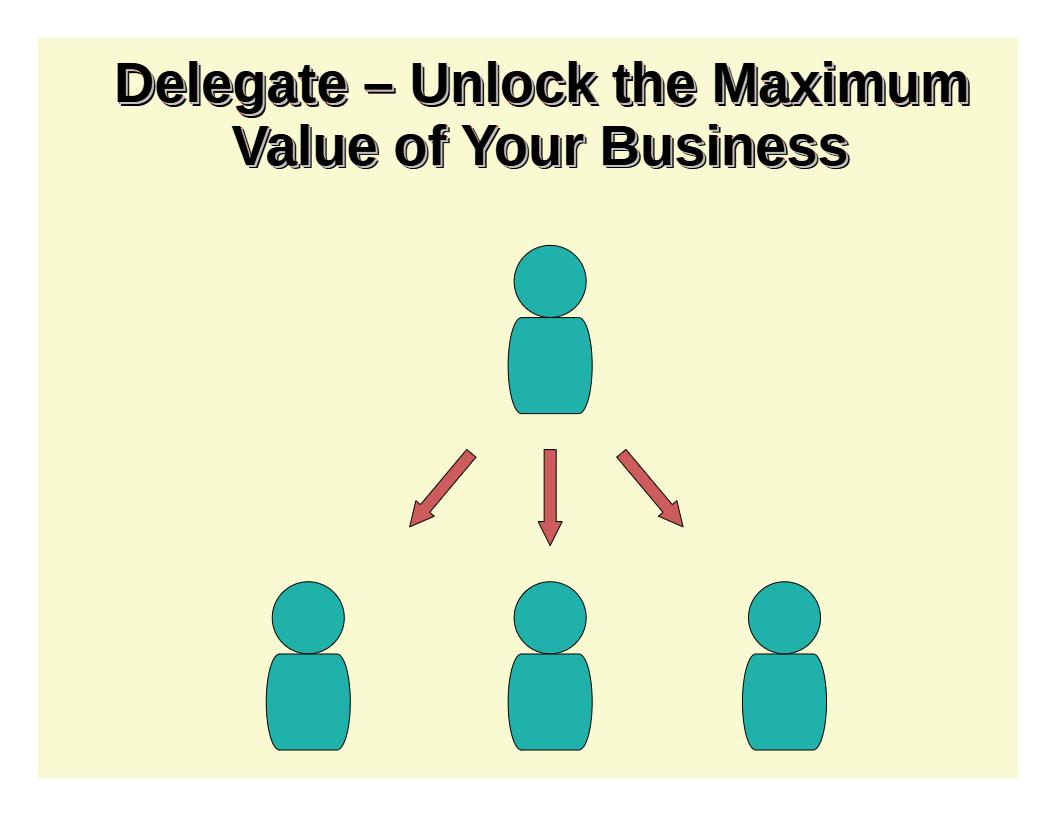
    There should be employees, not owners doing the indispensable management and operational tasks that the owner is doing. Ideally an owner should not have management or operational tasks to perform in the business and should not be indispensable to the business. Not only does having an owner doing tasks indispensable to the business put the business future in jeopardy, but it also makes the business less valuable. A sophisticated buyer of the business will not pay the maximum value for the business if the continued success of the business requires the selling owner to stay involved.

    There should be a written plan describing the decision-making process, strategy, entity selection, governance, owner buy-sell provisions, and succession provisions. The creation of this plan by using a decision-making process that becomes embedded in the culture of the business involves documenting a strategy that recognizes the values of the owners as they relate to the business, describing the goals that emanate from those values, and identifying actions to be taken to reach those goals.

    The implementation of such a plan is described in detail in the Owning a Business Substack at rickriebesell.substack.com. The strategy of obtaining maximum value from owning a business is Prior Diligence. The planning is implemented through Dynamic Planning.

  • Business Failure

    Business Failure

    One in four private sector U.S. businesses fail within their first year of operation. After five years, almost half (48%) have failed. After ten years, the failure rate is 65.3%. (According to data from the U.S. Bureau of Labor Statistics.)
    Generally, businesses fail when they run out of cash. Cash flow is a metric indicating how money is coming in and being spent in a business. Marketing decisions influence how much cash comes into the business. Operations and growth decisions control how the money is spent. Good decisions made about cash flow will prevent business failure.
    Small to medium sized businesses are often founded by someone with a good idea or skills that the marketplace demands at a point in time. Over time one person rarely possesses the knowledge and time to make all decisions concerning marketing, operations, growth, and changing business conditions. To make good decisions and prevent failure, there must be an owners’ strategy setting goals and actions taken by all elements of the business to accomplish those goals. Where the strategy changes or business conditions change, decisions affecting cash flow must be made by using the resources of the entire group constituting the business. The procedure of making decisions should be a group decision making process.
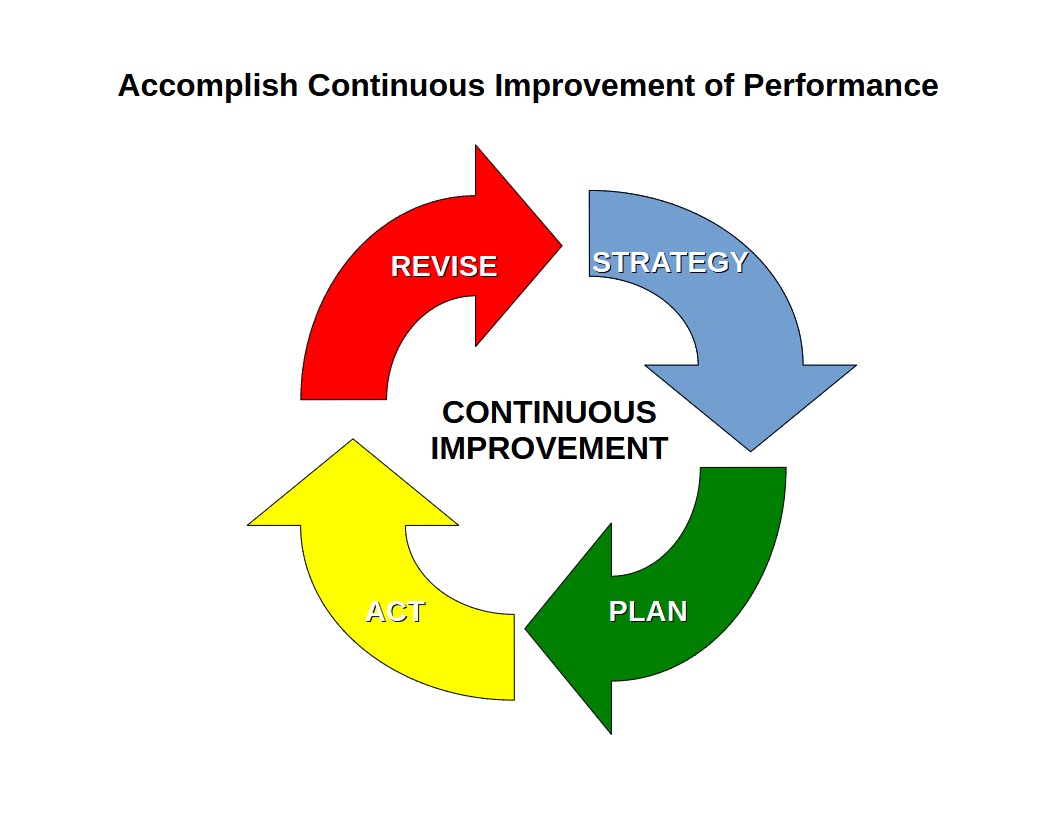
    When decisions are written down, they constitute a plan. A business plan documents decisions about cash flow and establishes an operating budget for the business. As marketing, operations, and ownership changes, decisions made by the group decision-making process should be documented to all elements of the business as a part of or a revision of the business plan. This makes the planning dynamic.
    Most small to medium sized businesses do not have a written business plan. This is the primary reason for the high failure rate. Business owners have a difficult time instituting a group decision-making process. Many owners plan by looking in the mirror and making decisions without the knowledge available in all elements of the business. Owners make strategy decisions and do not document those decisions. Where there is no business plan, goals are not articulated, and operating decisions are made without understanding the owner’s strategy.
    Given the failure rate, it helps to focus on success. What is success for business owners? Most owners would be very happy to sell the business for maximum value in three years.
    The Prior Diligence strategy and Dynamic Planning process provide owners with a methodology of accomplishing a sale of the business for maximum value in three years. Implementing a Prior Diligence strategy and accomplishing Dynamic Planning involves installing a working decision-making process in the business, documenting the owners’ strategy, establishing goals, and articulating the actions to be taken to reach those goals. All of this is described in detail in the Owning a Business substack at rickriebesell.substack.com.
    The best way to avoid business failure is to adopt the Prior Diligence strategy and implement Dynamic Planning with the goal of selling the business for maximum value in three years.

  • Discovering the Owner Agreement for Your Business

    Discovering the Owner Agreement for Your Business

    Where there is a small or medium sized business with more than one owner, there is an owner agreement. It may not be obvious – in most cases it is not written. But for any multi-owner business the owner agreement must be there for the business to function. To start a business there must be agreement about the business entity to use, the initial capital, the basic governance, and the operational functioning of the business. In various documents regarding these matters there will be writing documenting the decisions made by the owners, but most owners do not document the basic strategy that has led them to business ownership. Most of the time, business owners understand very little about what motivates the other owners of the business, and conversations among owners will not be about strategy but about urgent operational decisions. Owners often make assumptions about the motivations of other owners, and conflicts arise when these assumptions prove false. When the owners must make decisions about important issues involving funding, changing consumer behavior, training and development of management, succession (including buy-sell provisions), technological investment, and regulatory compliance (especially regarding tax issues), the motivations of the owners will have a significant influence on the decisions the owners will make. Think about the businesses you know where conflict among the owners has stymied the success of the business or caused it to go out of existence. It is important for the success of your business to discover and document an owner agreement that anticipates the foreseeable decisions the owners will have to make for business success.
    Most businesses do not have a documented owner agreement among the owners because it requires consistent effort to negotiate such an agreement. Often the subject matter is difficult to discuss, and the pressures of operating an owner-managed business make it difficult to find the time needed to accomplish this task. However, the success of businesses where the owners have documented an owner agreement indicates the benefit of taking on the task. There is a detailed description of how to adopt the Prior Diligence strategy and use Dynamic Planning in the Owning a Business substack at https://rickriebesell.substack.com. As with most complex and difficult tasks, it is best to use a segmented approach and address the various issues one at a time.
    The issues that owners must discuss and agree upon can be generally described. The motivations of each owner should be addressed in a written strategy for the business. The entity type of the business should be understood in terms of liability and tax consequences for each owner. Any grouping of owners (such as family or seniority) and the concerns of any such group should be described, and appropriate restrictions should be put in place. The governance of the business, including who will make policy and who will be the chief executive, should be set forth. The events (triggers) that will cause one or more owners to transfer interests in the business should be defined. The procedure of the transaction occurring after each type of trigger, including funding and payment, should be provided for in detail. For each transaction, the price of the interest transferred should be defined. If the business will act as a buyer in certain procedures, then the means of the business accumulating the funds for the transaction should be described. The final task is the consolidation of the decisions into one coherent written document.
    There should be a meeting of the owners and appropriate stakeholders to discuss each one of these general issues. For each issue there should be a separate meeting. The meetings should be held at regular intervals. The results of the meetings must be documented in writing. Where issues are technical or outside resources would be helpful, they should be utilized. There is a detailed description of how to implement an owner agreement in the Owning a Business substack at https://rickriebesell.substack.com. The documented decisions resulting from these discussions among the owners as consolidated into one coherent document will constitute an owner agreement and the primary planning for the business.

  • Where to Find Help

    Where to Find Help

    As the owner of a small to medium size business, you may have felt the need to ask for help but not felt comfortable doing so. Owners of businesses are often skilled in the business they own and enjoy the respect of their family and friends. If their businesses are successful (profitable), it is usually based on their leadership and good fortune. But things change and sometimes the successful are faced with difficulties and even poor results. The humility it takes for an owner to recognize that business is a team effort and that the policy-making group of a business needs help is a principal factor in business success. What is the best way to seek help?

    You probably expect me to recommend a consulting intervention. When I am consulted, the first advice I often give is to find a new way to perceive the business through all levels of the business. New perceptions come from the observations made from the experience of the employees of the business. Yet these perceptions are often not passed along to the owners or the policy-making group of the business. This is the first place to find help.

    Yes, a successful business is a team effort, but the chemistry of each team is different. Within a successful business are many individuals who have contributed to that success and have observations about the business that are unique and therefore helpful to forming new perspectives. In many businesses those who are not members of the policy-making group or in executive management are not consulted about their opinions concerning the operation of the business. It is often difficult for an owner to determine if this is the case in a business. Candor is often not an encouraged trait in a business. Yet there is knowledge and wisdom in the experience and opinions of those who operate the business.

    There is a reason for a chain of command, and in most businesses that hierarchy should be preserved. Yet if there is knowledge or opinion that is valuable and available only by direct contact with an employee, how should that contact be handled? There are different ways to accomplish this contact.

    Perhaps the most commonly used and most dangerous is that of the respected intermediary. This is a person within the business who is trusted by most elements of the business and receives candid communication from these elements. This information is given to the policy-making group by the intermediary. The danger comes from two sources: the integrity of the intermediary individual and the difficulty of maintaining the trustworthy status of the intermediary. Does the intermediary have an agenda? How confidential can the communication remain? Once the intermediary is compromised, the resulting distrust, both for the intermediary and the policy-making group can be toxic.

    The better solution, that used in Dynamic Planning, is to recruit observations on the format that also contains the operation plan, monitoring metrics, revisions, and other relevant communication. Dynamic Planning, explained in detail in the Substack, Owning A Business, http://rickriebesell.substack.com, utilizes a format that allows all elements of a business to see the plan narrative, the monitoring metrics, revisions made, and comments of all using the format. The use of this format is an exercise in leadership humility, communicating the plan, the results of the actions to realize the goals of the plan, the revisions made, and the comments of those using the format.